Whoa, I wasn’t expecting this. I’ve been carrying a smart-card wallet idea around for years now. It feels like the easiest way to bridge usability and hard security. Initially I assumed big metal devices were the only way to store private keys safely, but then smaller, NFC-enabled cards started behaving like vaults with a personality. On one hand the convenience is intoxicating, though actually there are nuanced tradeoffs around key management, recovery, and multi-asset handling that deserve attention before you trust everything to plastic.
Seriously, this caught me off guard. My instinct said the UX would be clunky and insecure. Turns out, companies are solving that with secure elements and tamper resistance. Actually, wait—let me rephrase that: not all smart-card solutions are equal, and evaluating firmware provenance, open-source attestations, and the physical security model matters far more than glossy marketing words. On the other hand, some designs elegantly support multiple currencies without bloating complexity, but you still need a robust recovery plan that doesn’t rely on a single card left in your wallet.
Hmm, my guard went up. Here’s what bugs me about seed phrases in practice. They’re powerful but fragile, and they invite user error during backups and restores. Initially I thought hardware wallets merely stored keys offline, though actually modern smart-card wallets incorporate on-card signing, transaction filtering, and sometimes biometric protections that shift trust assumptions significantly. My experience with real users showed me that recovery UX is the Achilles’ heel — people lose, forget, or mishandle mnemonic phrases while simultaneously wanting cross-chain flexibility and peace of mind, somethin’ I found very very real.
Here’s the thing. Smart-card hardware aims to reduce that friction while keeping private keys isolated. The promise is simple: a card in your wallet can sign transactions on your phone (oh, and by the way…). There are subtle security implications, though, such as where the keys are generated, whether attestation proves provenance, and if the device can be decommissioned without leaking residual secrets. On the practical side, business users want multi-currency support and provisioning workflows, while casual users care mostly about simplicity and instant recovery options that don’t require advanced technical knowledge.
Whoa, this feels different. I tested several cards in pockets, coffee shops, and airplane seats. Physical durability matters more than you think; a bent contact can break a day. In lab tests some NFC cards responded reliably to mobile apps, whereas others failed intermittently, and that kind of unpredictability erodes trust faster than any marketing campaign can build it up… Something felt off about one vendor’s recovery flow — too many steps, unclear confirmations, and a reliance on cloud backups that nullified the hardware’s offline advantage.
Really, this surprised others too. Security model differences are the crux of trust decisions. Open-source firmware and third-party audits reduce blind trust and increase accountability. On one hand, proprietary secure elements can provide high-assurance cryptography and anti-tampering features, though actually you must weigh that against lack of transparency and the risk of undisclosed backdoors, especially in geopolitical contexts. If you’re managing multiple currencies you also need to check which coin apps are implemented on-card versus handled by companion software, because that affects attack surface and user recovery strategies.
How a card-first approach feels in the real world
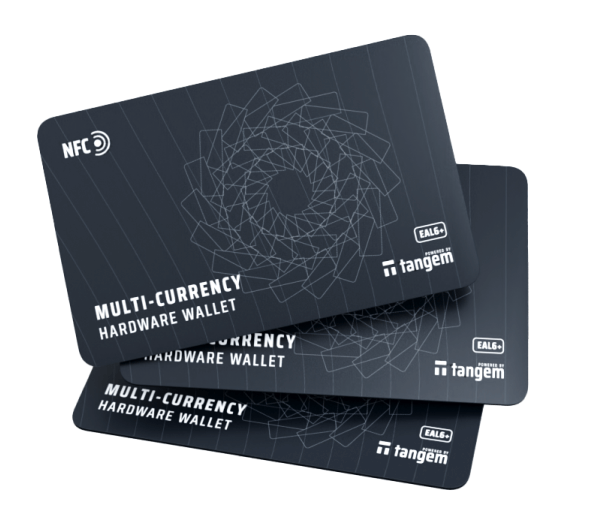
Okay, so check this out— I started using a smart-card from a company focused on card-first UX. There’s a neat balance between convenience and hardware-based signing, which is refreshing. For anyone curious about a card approach, consider the tangem hardware wallet as a practical example, because it shows how contactless signing and multi-currency support can fit into everyday life while retaining a strong security posture. That example isn’t an endorsement of perfection, though—it’s a useful case study to interrogate firmware transparency, recovery models, and the interplay between convenience and attack surfaces.
I’m biased, but I prefer designs that force explicit user intent and require physical taps for high-value operations. Multi-currency support should not be an afterthought; it must be baked into the OS layer. That’s because implementing dozens of coin applets badly can introduce protocol-level mistakes and create confusing UX that leads to dangerous user choices when confirming transactions on small screens or with terse descriptors. My experience suggests integrated transaction previews that decode memo fields, asset symbols, and counterparty addresses are small UX wins that reduce catastrophic errors, though they require constant updates and careful engineering tradeoffs.
Whoa, here’s a catch. Recovery remains thorny; users demand both simplicity and sovereignty. Split backups, social recovery, and Shamir schemes each have pros and cons. On the one hand Shamir offers distribution of risk across multiple shares, though actually implementing it securely across devices without exposing intermediate secrets is surprisingly complex and easy to botch if the vendor shortcuts cryptographic hygiene. If you’re institutional, hardware modules with custodial integrations might fit, whereas individuals may prefer a self-custodial card plus a paper or steel backup kept separately, ideally in a safety-deposit box or distributed with trusted parties.
Wow, think about that. Interoperability remains a sticking point for many multi-asset users. Standards like PSBT or EIP-712 help, but not every card supports them uniformly. Developers and wallet integrators must decide whether to put logic on the card, in the mobile companion, or split responsibilities in ways that preserve auditability while minimizing on-device complexity. This is an engineering tradeoff: more on-card logic reduces external attack vectors but increases firmware size and potential for obscure bugs, whereas thin-card approaches push complexity into the companion apps that are more frequently updated but also more exposed.
I’ll be honest— certification and attestation mechanisms are imperfect but helpful signals. Look for lodged root-of-trust checks and reproducible build pipelines when possible. On the regulatory front, liability questions and export controls can complicate supply chains, and vendors operating across borders will face varied disclosure requirements that affect open-source status and firmware availability. For users this means asking the right questions during purchase: how are recovery secrets handled, can I verify firmware, and what is the vendor’s end-of-life policy for deprecated products? Those answers matter a lot if you hold significant value.
Something felt off. But after digging, I’m cautiously optimistic about card-first approaches. They hit a sweet spot between wallet ergonomics and hardware isolation, when done right. Ultimately your threat model should drive choices: if you value frictionless everyday spending, a card with strong recovery and transparent firmware might be ideal, whereas high-value custody still benefits from multi-party setups and larger HSMs. I’m not 100% sure any one design wins for every user, though I’m leaning toward hybrid approaches where cards provide everyday convenience and institutional-grade modules backstop large holdings, and that feels pragmatic to me even if it’s not sexy.
FAQ
Is a smart-card wallet as secure as a traditional hardware wallet?
Short answer: it depends. If the card isolates private keys and enforces on-card signing, risks drop significantly. However, firmware transparency and supply chain integrity matter greatly. For high-value custody, combinations of multisig and institutional HSMs still provide stronger guarantees against correlated failures and physical coercion threats than a single card on its own. So evaluate your threat model, and choose solutions that layer protections suitable for your assets and daily use.
How does multi-currency support affect security?
Good question indeed. Supporting many coins increases code surface and testing burden. On-card implementations reduce external parsing dependencies but need updates for protocol changes. If a vendor supports many token standards poorly, you might see address-encoding errors, signature mismatches, or misinterpreted memo fields, any of which could cause irreversible losses. Therefore prioritize vendors that maintain active support repositories, clear change logs, and a responsible disclosure process so issues can be resolved before they cause wallet-level disasters.
Comment